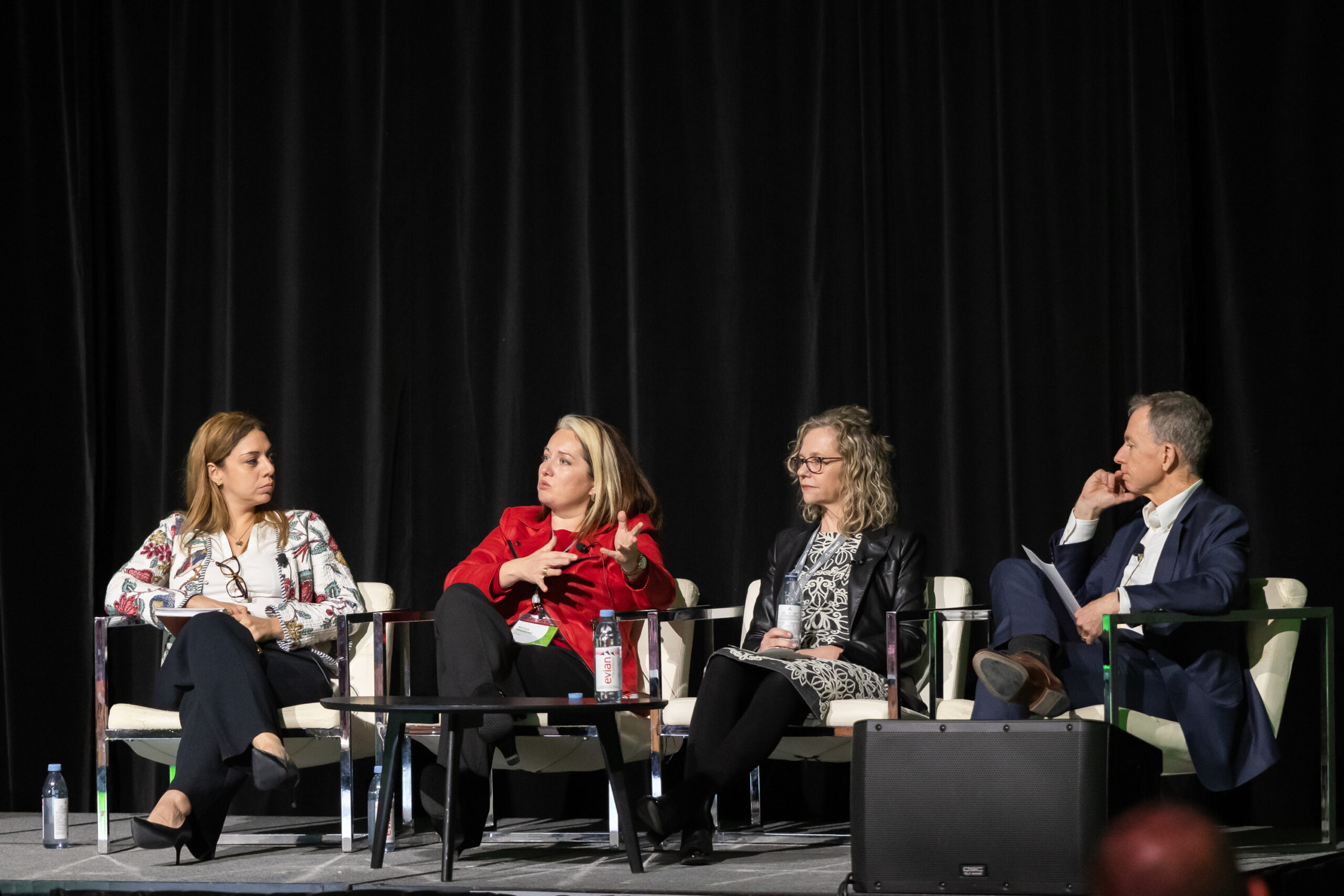
As the real estate and mortgage market industries grow increasingly digital, the landscape of fraud is evolving rapidly. During Teranet’s annual Market Insight Forum dedicated to Fraud Prevention Month, a panel of cross-industry experts came together to discuss the pressing risks facing the industry and the critical role collaboration and data play in addressing them.
Moderated by David Hosey, Teranet’s Vice President, IT & Chief Information Security Officer, the panel included:
- Antoinette Leung, Executive Vice President, Market Conduct, Financial Services Regulatory Authority of Ontario (FSRA)
- Sadiq Boodoo, Principal Broker and Owner, Approved Financial Services
- Ray Leclair, Vice President, Public Affairs, LAWPRO
Together, they shared examples of their experience with the latest fraud trends, red flags and preventative strategies shaping Canada’s real estate market in 2026.
Emerging patterns in real estate and mortgage fraud
Each panelist highlighted the reality that fraudsters are refining their tactics with sophistication that matches the technological advancement of the industry. Sadiq pointed to a rise in borrowers misrepresenting assets and concealing secondary financing under the guise of “gifted down payments”. These tactics aim to bypass lender restrictions and strain the boundaries of underwriting oversight.
Ray offered the analogy of fraud as a “team sport”. He warned that complacency allows fraud schemes to resurface in new forms. From counterfeit bank drafts to forged IDs, he highlighted the ongoing challenge of identity theft and funds diversion, especially as digital transactions become standard.
For Antoinette, identity-based fraud schemes are a concern, and she noted the increasing use of deepfakes and remote signing as avenues for fraud. She warned of a rise in borrowers misrepresenting financial profiles amid affordability challenges. She also stressed the important reputational and systemic costs that can result from unchecked fraud.
Red flags, digital innovation and the evolving fraud landscape
All three panelists agreed that fraud rarely announces itself with glaring signs and instead is often a series of subtle inconsistencies. Sadiq advised mortgage brokers to look for small details, such as perfectly rounded income numbers, unexplained jumps in self-employment income or seemingly scripted questions to employment questions. A resistance to provide documents or sudden changes in down payment stories may also be red flags and early signs of trouble.
The discussion then turned to technology, highlighting that while digital closing, automation and AI have improved audit trails and fraud detection tools, they’ve also given rise to new fraudulent threats. AI-generated documents are increasingly difficult to spot, and deepfake identities present new challenges for verification. The panel recommended multi-factor authentication, direct-source income verification and leveraging third-party ID verification services in addition to always maintaining a healthy skepticism and a continued focus on probing questions.
Industry collaboration and regulatory action
One of the forum’s key themes was the need for greater collaboration across all industry players. Antoinette, Ray and Sadiq agreed that fraudsters are highly connected and share tactics, while mortgage brokers, lenders and lawyers often work in silos. The creation of centralized fraud reporting systems and improved information-sharing between regulators and industry professionals will be crucial steps moving forward as we all work to combat fraud. Sadiq and Ray both emphasized the need for technological solutions that enable more seamless cooperation while respecting privacy and compliance requirements.
Regulators are also stepping up their enforcement. Antoinette shared that FSRA has taken strong actions against mortgage brokers and brokerages found complicit in fraud, including license revocations and monetary penalties. The message is clear: professionals must not only avoid facilitating fraud but also act when something seems wrong. Reporting credible information to authorities is essential to the health of the industry.
Lessons learned from Sadiq, Antoinette and Ray
The forum ended as each panelist shared real-world examples of fraud they have encountered to highlight the importance of vigilance. Sadiq recounted catching a fraudulent bank statement due to an almost imperceptible typo, stressing that fraudsters’ attention to detail is high, but not impossible to catch. Ray reminded attendees that fraud is not limited by geography, property type or firm size, any person or property can be a target. Antoinette spoke about the importance of regular training and open communication with organizations as critical defenses against fraud.
Teranet thanks Sadiq, Antoinette and Ray for joining us to share their insights and valuable stories. If you couldn’t join the Market Insight Forum, you can watch a copy of the recording here.